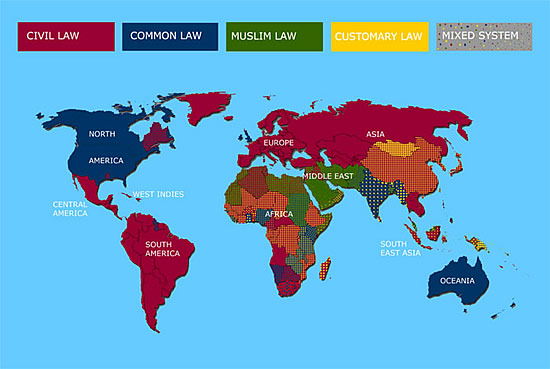
This class will examine the relationship between politics and culture. Cultural values shared by members of society have a strong impact on what type of government people have, and how they participate in politics.
The challenges are to explain the mechanics of the American political system, and understand the changing nature of the purposes it has served throughout history. The nature of the American political system cannot be understood without accounting for the inclusion of groups that are, excluded from participation. As these groups gain the ability to participate, does the purpose of government change as well? We will also focus on aspects of the system remaining constant over the years.
Today's class there are three articles we are going over, "Inverted Totalitarianism" by Sheldon Wolin, a well regarded American political philosopher; the essay "Two Faces of Power" by Peter Bachrach and Morton Baratz, one of the most cited articles in the peer-reviewed journal, American Political Science Review; and an article I wrote called "Repressing Radical Protest, Tolerating Reactionary Violence." My article looks at the double-standard of American politics in how the government represses so harshly protests which are critical of capitalism and racism and other forms of bigotry (or left-wing protests) while treating right-wing protests much more gently. The most recent examples of both being the protests over the murder of George Floyd in 2020 and the Capitol Riot in the beginning of 2021.
The George Floyd protests were met with severe responses from police and other law enforcement organizations, including non-state militias whose members are made up of right-wing extremists. According to a study by the political scientist Erica Chenoweth, the protests over the summer of 2020 included thousands of distinct events, and 95 percent of them were non-violent. Despite this, the interpretation of these protests by the media almost exclusively focused on violent episodes. Of the protests that turned violent, she found that most were initiated by the police or other counter-protestors. A particularly good example would be the severe response by authorities to non-violent protestors in Lafayette Square in Washington. This was done to give Trump a photo-op holding the Bible. I highlight this example because the many of the authorities on hand during the violent repression of this protest, were also on hand during the Capitol Riot on Jan. 6.
In this example, we saw a much different response. The police response was rather weak and ineffective at stopping the protestors from storming the Capitol. Given the events of the recent summer we know that the police certainly have the capability to crack down on protests if they want. The question is why didn't they want to? I believe the answer has a lot to do with the class and racial characteristics of the protestors of both groups. The Floyd protests were made up of a multitude of groups of all backgrounds but featured a large presence of working class black and Latino protestors, or people of color. The Capitol Riot were almost all white, and also mostly middle class people. It also has to do with what they were protesting. One group was protesting police violence, the other group was protesting phony claims of a stolen election for a President who had large support and several endorsements from police and law enforcement organizations.
This double standard stands out even more, because the Floyd protests were mostly non-violent, while the Capitol Riot was extremely violent, and in some cases the protestors even made clear their intent to use violence. A lot of this is coming out now during the Congressional investigation into this. Before this, a lot of people dismissed the importance and seriousness of the Capitol Riot something that I have never understood why. I think the intent was quite clear, these people were literally trying to overthrow the government and establish Trump as a dictator, who would use this event as a pretext to declare a national emergency and stay in office that way. This is not all that different from how Adolph Hitler became the fascist dictator of Germany, who was an elected leader who then used a phony emergency (set up by the Nazis) to declare a state of emergency and became a permanent dictator, until his downfall.
I think the existence of the double standard in how authorities responded is clear, and I think the reasons for it are also clear. My explanation for it is also dialectical in that I look at the connections between various factors, and not just one thing. I also look for historical connections. From this point, I look into the past and see this double standard in historical context. I find pretty clear evidence that this double standard has always been around. I look at several Supreme Court cases from the early 20th century over the issue of free speech involving socialists, many of them criticizing the US entry into World War I, but some after as well. In all cases, the court ruled against people's right to free speech, leading to several people serving jail time, being deported, some were even killed by authorities, simply for speaking out or handing out leaflets and pamphlets against the war. On the other hand, cases involving white supremacists, like members of the KKK, had charges against them overturned or in many cases were not even charged at all. There is an event known as Red Summer in 1919, which was a period of particularly high levels of racial violence and lynching. Most of the perpetrators of this kind of violence were not even charged. The same year the leader of the Socialist Party Eugene Debs was sentenced to prison simply for making a speech supporting protestors of the war, his conviction was upheld by the Supreme Court, and the Democratic administration under Woodrow Wilson refused to grant a pardon despite public outcries over this. He would later be pardoned a few years later under a Republican administration and died not too long after this, his health being severely affected by his time in prison.
Here is a link to a list of several important Supreme Court cases involving free speech, some of which I examine in my article. All of the charges involving left-wing protestors were upheld by the court. The only convictions overturned involved racists, the only exception is Hess v. Indiana in 1973 which concerned an anti-war protest (although by 1973 the war had become extremely unpopular among most segments of America) and this was during the court's brief liberal phase after World War II.
This speaks to the power of left-wing and right-wing protests. The left was a growing force in politics in the late 19th and early 20th century, but has been severely repressed by authorities. The result of course is that the left in this country is fairly weak in terms of its power over politics. The right on the other hand is relatively strong as a result of never being severely repressed by the authorities. This plays out today in that unpopular right-wing policies are commonly imposed on people in this country. The most recent example being the Supreme Court (who we also see historically plays an extremely conservative role in American politics) taking away the right to an abortion. There are many factors involved in this as well of course, but the weakness of the left and the strength of the right are important factors.
The political theorist and activist Cornel West gives many examples of American socialists, but probably none better than Martin Luther King Jr. King learned how to organize from socialists like A. Philip Randolph and Bayard Rustin, both members of the Socialist Party. King, especially, in his last three years, became much more radical, speaking out against the capitalist system, which exploits people of all backgrounds, and spoke out against the Vietnam War. In fact, King was killed (under suspicious circumstances), exactly one year to the day he gave his most well known anti-war speech. That a prominent socialist like this can be assassinated speaks also to the crushing of the left in American politics. There is no counter-part on the right, no prominent right-wing political leader has been assassinated at least not in modern times. I honestly cannot think of any off the top of my head. In King's writings, like "Letter from Birmingham Jail," he makes as many references to Socrates, the famed Greek philosopher and teacher of Plato, as he does to Christian theologians like Augustine or Thomas Aquinas.

West also argues you cannot talk about racism without talking about capitalism. You cannot talk about racism without talking about colonialism, colonial conquest of indigenous peoples, slavery, the slave trade, all of which played a foundational role in the development of capitalism. As the capitalist system develops it replaces economies based on the exploitation of slave labor with exploitation of wage labor, or paying a wage in exchange for someone's service. Besides creating a volatile economic system that leads to frequent crashes and recessions and increasing inequality overall, the capitalist system based on wage labor turns everything into a commodity, including people. A commodity is simply an object exchanged on a market in order to make a profit. We can see this clearly with the slave trade, which reduced people to objects sold in a market, and used unpaid slave labor to create immense wealth. Racist ideologies, or beliefs, help rationalize slavery and colonial conquest, which also used religion as a justification early on. Again, capitalism turns everything into a commodity: education, healthcare (including prescription drugs), housing, food, art, news, etc. All these things are reduced to objects produced and exchanged in order to make a profit. Even today, this goes on with immigration. What value does the capitalist see in an immigrant? As a source of cheap labor, nothing more. Most people already understand, to some extent, the connections between racism and capitalism. However, there are attempts by certain institutions like the press and academic research, like at The New York Times, to attempt to talk racism without talking about capitalism. This at least is the charge made by the radical socialist website, the World Socialist Website, against the recent 1619 Project by the Times. They recently interviewed several historians about this, the links to the articles are here. I would recommend especially the interviews by Adolph Reed Jr., Victoria Bynum, Gordon Wood, and James Oakes. Of course, the Times is the same institution (with many others) that was pushing the Russiagate narrative that Russian interference is what caused Hillary Clinton to lose the 2016 election, and pushing the Weapons of Mass Destruction, or WMDs lie in 2003 leading up to the invasion of Iraq. Separating racism from capitalism is more than just a mistake, but a deliberate attempt to give people a false historical narrative that conceals the history of economic exploitation that continues in the present.
The issue of power, or the concentration of power is also discussed in Wolin's article published by The Nation, in 2003. The Nation is an important publication in US history, especially in the post-World War II era, under the editorial direction of Carey McWilliams, and provided a voice of dissent during McCarthyism, gave a platform for Martin Luther King Jr., and spoke out against the Vietnam War, when newspapers like The New York Times supported it initially. McWilliams even gave "gonzo" journalist Hunter S. Thompson his first job, reporting on the Hells Angels. Wolin deals with what he considers the corruption of all American political institutions: the Presidency, legislatures, courts, political parties, the media, universities, labor unions and more. He states:
Thus the elements are in place: a weak legislative body, a legal system that is both compliant and repressive, a party system in which one party, whether in opposition or in the majority, is bent upon reconstituting the existing system so as to permanently favor a ruling class of the wealthy, the well-connected and the corporate, while leaving the poorer citizens with a sense of helplessness and political despair, and, at the same time, keeping the middle classes dangling between fear of unemployment and expectations of fantastic rewards once the new economy recovers. That scheme is abetted by a sycophantic and increasingly concentrated media; by the integration of universities with their corporate benefactors; by a propaganda machine institutionalized in well-funded think tanks and conservative foundations; by the increasingly closer cooperation between local police and national law enforcement agencies aimed at identifying terrorists, suspicious aliens and domestic dissidents.
Wolin argues, this is due to the American pursuit of Empire since the end of World War II, but during the Bush administration (and after) has become increasingly overt in its imperialistic designs:
The change has been intimated by the sudden popularity of two political terms rarely applied earlier to the American political system. “Empire” and “superpower” both suggest that a new system of power, concentrated and expansive, has come into existence and supplanted the old terms. “Empire” and “superpower” accurately symbolize the projection of American power abroad, but for that reason they obscure the internal consequences. Consider how odd it would sound if we were to refer to “the Constitution of the American Empire” or “superpower democracy.” The reason they ring false is that “constitution” signifies limitations on power, while “democracy” commonly refers to the active involvement of citizens with their government and the responsiveness of government to its citizens. For their part, “empire” and “superpower” stand for the surpassing of limits and the dwarfing of the citizenry.
This has created a new form of political power in the U.S. in what he calls inverted totalitarian. Where historical examples of totalitarian governments like Nazi Germany or the Soviet Union featured a leader surrounded by cheering masses. The inverted state prefers the anonymity of the corporate-state the fusion of economic and political power, and passive citizens who do not participate in politics at all:
By inverted I mean that while the current system and its operatives share with Nazism the aspiration toward unlimited power and aggressive expansionism, their methods and actions seem upside down. For example, in Weimar Germany, before the Nazis took power, the “streets” were dominated by totalitarian-oriented gangs of toughs, and whatever there was of democracy was confined to the government. In the United States, however, it is the streets where democracy is most alive–while the real danger lies with an increasingly unbridled government.
Or another example:
Under Nazi rule there was never any doubt about “big business” being subordinated to the political regime. In the United States, however, it has been apparent for decades that corporate power has become so predominant in the political establishment, particularly in the Republican Party, and so dominant in its influence over policy, as to suggest a role inversion the exact opposite of the Nazis’. At the same time, it is corporate power, as the representative of the dynamic of capitalism and of the ever-expanding power made available by the integration of science and technology with the structure of capitalism, that produces the totalizing drive.
Wolin still retained some faith in the Democratic Party, but had he lived to see the 2016 election (he died in 2015 at 93) would he still retain faith? Does the critique need to go even further back to the origins of the country? Although some may consider Wolin alarmist, it is hard to deny these conclusions if the institutions of American society are examined in detail, as we will do throughout the class.
Another theme by Wolin in his earlier work is the extent to which people are taught an anti-political language, that elevates the private realm of economics, over the public realm of politics, something he associates with philosophers like John Locke. This theme is developed in his bookPolitics and Vision(1960), and relates to his later theme of inverted totalitarianism, particularly the passivity of modern citizens and lack of political education. For Wolin, "the political" is different from everyday politics, the political refers to moments where people act together cooperatively for their own well-being, seen for example when people respond to a crisis or a war, however moments of the political are rare. Politics, on the other hand, refers to the everyday business of government and the endless competition of interests. Power is the ability of the people collectively to do things they would not be able to do on their own, but the meaning of power is perhaps the most debated concept in all of the social sciences. Ultimately, Wolin comes to see democracy as something like a fugitive, harassed and persecuted by the authorities, and always on the move, something very temporary and fleeting. Even in academia, Wolin's views have a kind of fugitive status, as most social scientists follow the "pluralist" tradition, rather than the power based theories of Wolin, and earlier theorists like C. Wright Mills.
This speaks to the other essay "Two Faces of Power." The authors of this article come out in favor of the pluralist idea of politics but still argues there are ways in which certain controversial issues are suppressed by not talking about them. Overall, I do not have much to recommend about this article. It was highly influential in its day, but this speaks to some of the limitations of the formal study of politics in America. In other words, most prominent American political scientists are committed to denying there is such a concentration of power as described by Wolin or Mills before him.
This should cover a basic introduction to the idea of political power, and how culture influences this. Next class, we will explore more the political culture of the US. If you have a chance listen to the interview between Sheldon Wolin and Chris Hedges.
Assignment: On Discussion Board, choose a quote from one of the readings listed on the syllabus that can be found on Blackboard, write out the quote. Then, explain the meaning of the quote, and why you chose the quote. In other words, three paragraphs: quote, meaning, why you chose it. All of the assignments follow the same format.